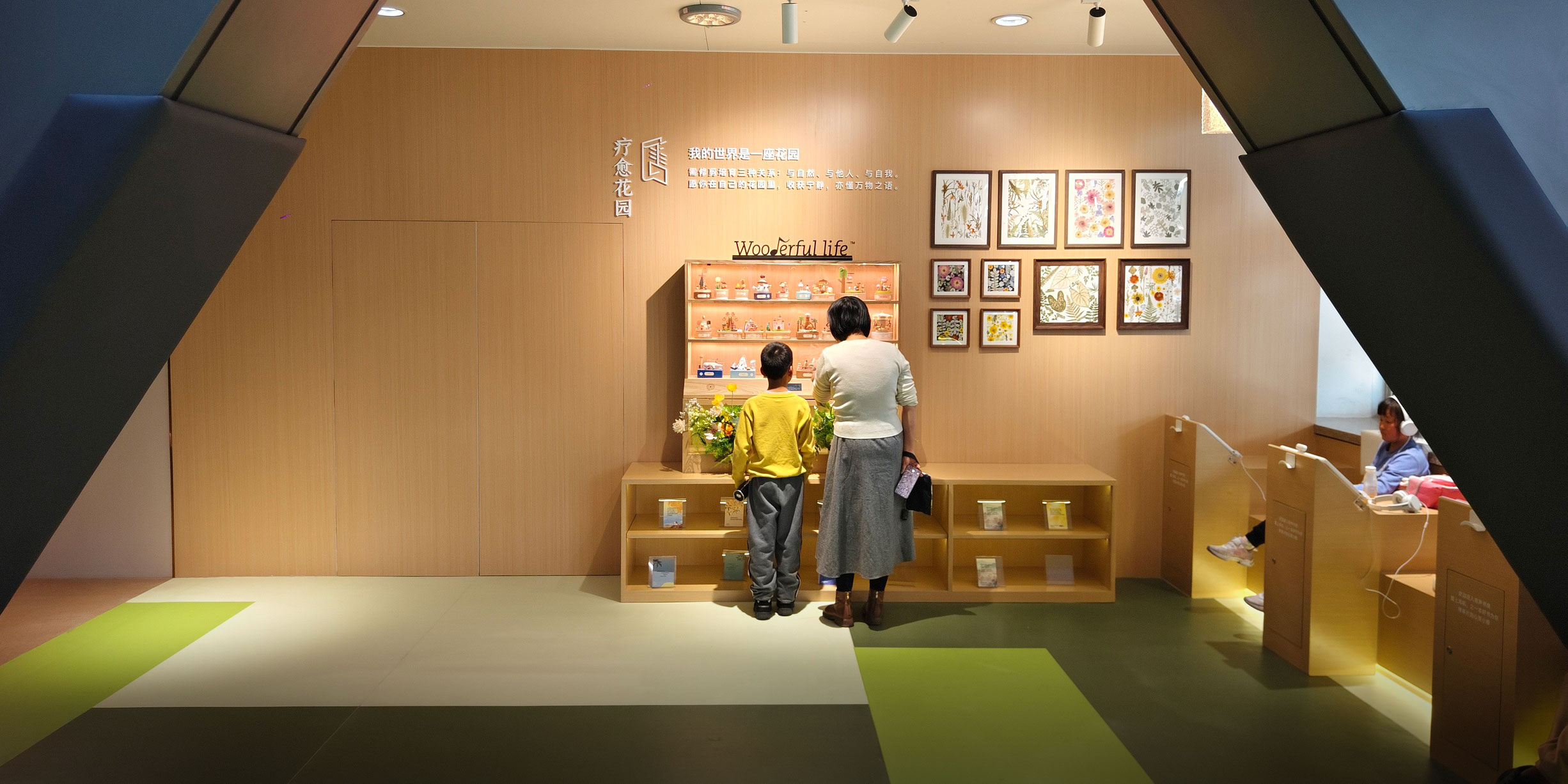
Can a Library Read Your Mood? Wuhan Wants to Find Out
A major Chinese library has, for the first time, opened a section dedicated to improving patrons’ mental health. Designed around the idea that books can help people understand and regulate their emotions, the “Emotional Library” in the Hubei Provincial Library in the central Chinese city of Wuhan combines themed book collections with interactive digital installations.
Since opening on a trial basis in February, the space, located on the library’s sixth floor, has received around 40,000 visitors. It officially opened to the public on June 17.
With mental health conditions on the rise, China is increasingly paying attention to emotional well-being. According to the WHO, roughly 54 million people live with depression in the country, and another 41 million have some form of anxiety disorder.
The Emotional Library offers readers personalized book recommendations either by having them specify their current emotion via a touchscreen or by using intelligent camera technology to scan their current emotional state, which can be saved for later recommendations.
The space also features areas dedicated to books on emotions and dream interpretation, as well as immersive audio experiences — including natural sounds, mood-dependent music, and specific frequencies to help soothe them — a therapeutic garden, and an art gallery with emotion-related works. The space’s therapeutic garden offers drawing materials to encourage readers to express their emotions through drawing and writing. Works will be displayed publicly in the library.
With its official opening, the library added two new sub-sections aimed at connecting visitors’ emotional well-being with technology and travel. One uses vocal analysis and AI-generated visual effects to identify a person’s emotional state and turn it into artistic imagery. The second recommends travel destinations through short videos, encouraging visitors to find emotional relief by exploring new places.
The library also features an interactive hand-drawn map featuring Hubei’s landscapes, historical sites, and local cuisine. Visitors can scan QR codes to access reading recommendations and digital resources related to each.
Library officials said the project reflects an effort by public institutions to respond to growing emotional pressures in modern life by expanding their role beyond traditional book lending. They plan to continue developing services that combine emotional well-being, digital reading, and tourism.
Public response to the Emotional Library has been positive, with users on lifestyle platform Xiaohongshu, also known as RedNote, describing the space as “innovative” and “therapeutic.”
“I saw my emotions and dreams reflected in countless AI mirrors, and also listened to the sounds of nature from America,” wrote one user. “It was very healing.”
Editor: Marianne Gunnarsson.
(Header image: An interior view of “Emotional Library” in Wuhan, Hubei province, 2026. VCG)